
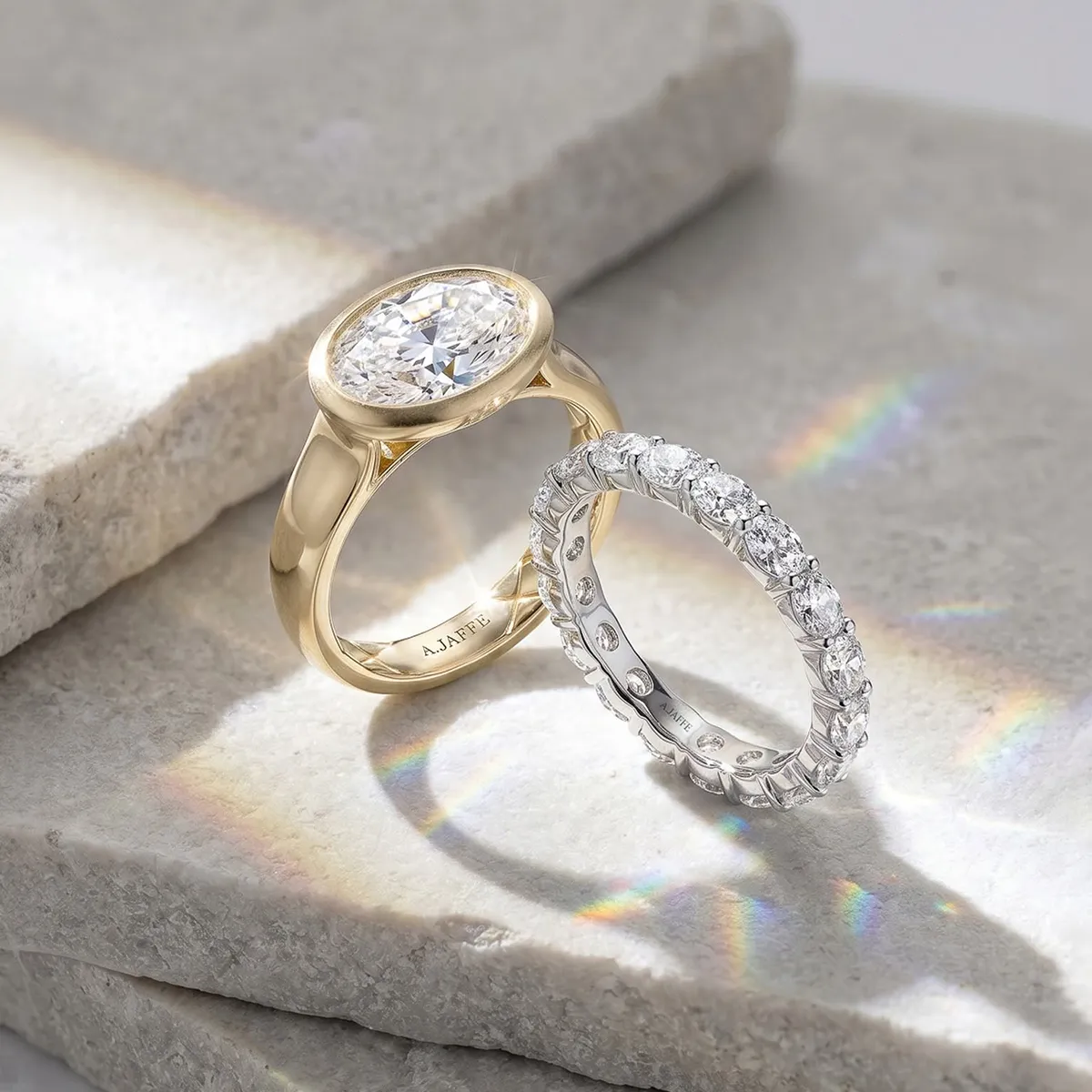
Choosing jewelry often brings up questions about diamonds, metals, repairs, and care. At Hingham Jewelers, we’re happy to explain the options, show you the differences, and help you choose what feels right for you.
Should I choose a natural or lab-grown diamond?
This is a personal choice, and we’re happy to show you both.
A natural diamond formed deep within the earth over a very long period of time. Some people are drawn to that geological story, the uniqueness of a natural diamond, and the meaning they associate with it.
A lab-grown diamond is a real diamond created in a laboratory. It has essentially the same chemical, physical, and optical properties as a natural diamond, but it has a different origin and is typically available at a lower price. That can give you room in your budget for a larger center stone or different specifications.
Neither choice is right for everyone. We’ll answer your questions and help you compare both options without pressure.
What is the difference between 14-karat and 18-karat gold?
The difference is the amount of pure gold in the metal. 14-karat gold is 58.5% pure gold; 18-karat gold is 75% pure gold.
Because it contains more pure gold, 18-karat gold can have a richer color and is generally a little softer. 14-karat gold contains more alloy metals, which often makes it a practical choice for everyday wear. The best option depends on the design, how you wear your jewelry, and the look you prefer.
What is the difference between platinum and white gold?
Platinum is naturally white and does not need rhodium plating to maintain its color. It is also a denser metal, so a platinum ring may feel heavier than a similar ring in gold.
White gold is made by alloying gold with other metals. It is often finished with a thin layer of rhodium to give it a bright white appearance. That coating gradually wears with use, and the ring can be replated to restore the finish.
The metals also respond differently to force. Platinum can bend or deform under a hard impact, while gold may bend, crack, or break depending on the alloy and design. No setting is indestructible, so the right choice depends on your lifestyle and the piece itself.
Should I choose a prong or bezel setting?
A bezel setting uses a rim of metal around the stone. It offers more coverage and can help protect the stone’s edge. With fewer exposed prongs, it may also be a comfortable choice for someone whose ring catches on clothing or gets a lot of everyday wear. Bezels are especially popular for pendants.
A prong setting holds the stone with small metal claws. It shows more of the diamond and is a classic choice for engagement rings. Because more of the stone is exposed, the setting should be checked periodically to make sure the prongs remain secure.
The best setting depends on the stone, the design, and how you plan to wear it.
How do oval and elongated cushion diamonds differ?
An oval diamond has a softly rounded outline. An elongated cushion has a rectangular shape with rounded corners and a pillow-like appearance. Both come in different proportions, so two stones of the same shape can look quite different.
Ovals are especially popular with our lab-grown diamond clients. But the best way to choose is to see the shapes side by side and try them on your hand. We can help you compare them in our showroom.
Does my older ring need a repair or a full restoration?
A repair may be appropriate for a relatively newer piece with a specific problem, such as a damaged prong or a loose stone. With older jewelry that has seen decades of wear, the metal may have become worn or fatigued in several places. In that case, a broader restoration may be the better long-term solution.
Age alone doesn’t determine what a piece needs. We assess each item carefully, discuss its condition with you, and consult with our goldsmith before recommending a repair or restoration.
What is the difference between an insurance appraisal and an estate appraisal?
An insurance appraisal generally describes the jewelry and estimates the cost to replace it with a comparable piece. It can help you arrange coverage in case of loss, theft, or damage.
An estate appraisal is prepared for a different purpose, such as settling an estate or helping divide inherited jewelry fairly. It may use fair market value or another standard required for the situation. The appropriate appraisal depends on why the valuation is needed, so tell us how you plan to use it when you make an appointment.
An appraisal value is not necessarily the amount you would receive if you sold the jewelry.
Can you redesign inherited or family jewelry?
Yes. We can discuss ways to update or redesign inherited jewelry, and clients are welcome to bring in their own stones or gold. Some people choose to preserve a piece as it is; others want to incorporate its stones or metal into a new design.
We’ll look at the materials, talk through your goals, and explain what may be possible before work begins.
How long does a custom jewelry project take?
Many custom projects take about four to six weeks, though timing depends on the design, materials, and any changes along the way. We’ll discuss a realistic timeline during your consultation.
Do I need an appointment to talk about a design?
Consultations are complimentary, and appointments are recommended for custom work or in-person diamond viewing. An appointment gives us time to learn what you have in mind, answer questions, and explore design options with you. You can also visit our showroom to compare diamond shapes, settings, and metals in person.
How should I care for my ring?
Have your ring inspected from time to time, especially if it has been struck, snagged, or feels different than usual. If a stone seems loose or a prong feels rough, stop wearing the ring and bring it in for an inspection.
Regular cleaning can help your jewelry look its best, but cleaning does not replace checking that the setting is secure. We’re glad to clean and inspect your jewelry and let you know if we see anything that needs attention.
Should I choose a natural or lab-grown diamond?
This is a personal choice, and we’re happy to show you both.
A natural diamond formed deep within the earth over a very long period of time. Some people are drawn to that geological story, the uniqueness of a natural diamond, and the meaning they associate with it.
A lab-grown diamond is a real diamond created in a laboratory. It has essentially the same chemical, physical, and optical properties as a natural diamond, but it has a different origin and is typically available at a lower price. That can give you room in your budget for a larger center stone or different specifications.
Neither choice is right for everyone. We’ll answer your questions and help you compare both options without pressure.
What is the difference between 14-karat and 18-karat gold?
The difference is the amount of pure gold in the metal. 14-karat gold is 58.5% pure gold; 18-karat gold is 75% pure gold.
Because it contains more pure gold, 18-karat gold can have a richer color and is generally a little softer. 14-karat gold contains more alloy metals, which often makes it a practical choice for everyday wear. The best option depends on the design, how you wear your jewelry, and the look you prefer.
What is the difference between platinum and white gold?
Platinum is naturally white and does not need rhodium plating to maintain its color. It is also a denser metal, so a platinum ring may feel heavier than a similar ring in gold.
White gold is made by alloying gold with other metals. It is often finished with a thin layer of rhodium to give it a bright white appearance. That coating gradually wears with use, and the ring can be replated to restore the finish.
The metals also respond differently to force. Platinum can bend or deform under a hard impact, while gold may bend, crack, or break depending on the alloy and design. No setting is indestructible, so the right choice depends on your lifestyle and the piece itself.
Should I choose a prong or bezel setting?
A bezel setting uses a rim of metal around the stone. It offers more coverage and can help protect the stone’s edge. With fewer exposed prongs, it may also be a comfortable choice for someone whose ring catches on clothing or gets a lot of everyday wear. Bezels are especially popular for pendants.
A prong setting holds the stone with small metal claws. It shows more of the diamond and is a classic choice for engagement rings. Because more of the stone is exposed, the setting should be checked periodically to make sure the prongs remain secure.
The best setting depends on the stone, the design, and how you plan to wear it.
How do oval and elongated cushion diamonds differ?
An oval diamond has a softly rounded outline. An elongated cushion has a rectangular shape with rounded corners and a pillow-like appearance. Both come in different proportions, so two stones of the same shape can look quite different.
Ovals are especially popular with our lab-grown diamond clients. But the best way to choose is to see the shapes side by side and try them on your hand. We can help you compare them in our showroom.
Does my older ring need a repair or a full restoration?
A repair may be appropriate for a relatively newer piece with a specific problem, such as a damaged prong or a loose stone. With older jewelry that has seen decades of wear, the metal may have become worn or fatigued in several places. In that case, a broader restoration may be the better long-term solution.
Age alone doesn’t determine what a piece needs. We assess each item carefully, discuss its condition with you, and consult with our goldsmith before recommending a repair or restoration.
What is the difference between an insurance appraisal and an estate appraisal?
An insurance appraisal generally describes the jewelry and estimates the cost to replace it with a comparable piece. It can help you arrange coverage in case of loss, theft, or damage.
An estate appraisal is prepared for a different purpose, such as settling an estate or helping divide inherited jewelry fairly. It may use fair market value or another standard required for the situation. The appropriate appraisal depends on why the valuation is needed, so tell us how you plan to use it when you make an appointment.
An appraisal value is not necessarily the amount you would receive if you sold the jewelry.
Can you redesign inherited or family jewelry?
Yes. We can discuss ways to update or redesign inherited jewelry, and clients are welcome to bring in their own stones or gold. Some people choose to preserve a piece as it is; others want to incorporate its stones or metal into a new design.
We’ll look at the materials, talk through your goals, and explain what may be possible before work begins.
How long does a custom jewelry project take?
Many custom projects take about four to six weeks, though timing depends on the design, materials, and any changes along the way. We’ll discuss a realistic timeline during your consultation.
Do I need an appointment to talk about a design?
Consultations are complimentary, and appointments are recommended for custom work or in-person diamond viewing. An appointment gives us time to learn what you have in mind, answer questions, and explore design options with you. You can also visit our showroom to compare diamond shapes, settings, and metals in person.
How should I care for my ring?
Have your ring inspected from time to time, especially if it has been struck, snagged, or feels different than usual. If a stone seems loose or a prong feels rough, stop wearing the ring and bring it in for an inspection.
Regular cleaning can help your jewelry look its best, but cleaning does not replace checking that the setting is secure. We’re glad to clean and inspect your jewelry and let you know if we see anything that needs attention.