Things to Know
Jewelry Repairs, Appraisals, Buying and Watch Services at Hingham Jewelers
Published: Sep 22, 2026
Jewelry often carries more than monetary value. It may represent a family history, a milestone, an inheritance, or years of memories. When a piece needs repair, an appraisal, insurance documentation, or careful evaluation for sale, it is important to work with professionals who understand both the materials and the meaning behind the item.
Hingham Jewelers has served South Shore families since 1948. As a third-generation, family-owned jeweler, we provide jewelry repairs, appraisals, custom redesign, watch services, and case-by-case purchasing evaluations.
This guide answers common questions about selling jewelry, understanding value, arranging an appraisal, repairing damaged pieces, and servicing watches.
Jewelry Repair Policies and Customer Expectations
What types of jewelry do you repair?
We repair jewelry from Hingham Jewelers as well as pieces purchased elsewhere.
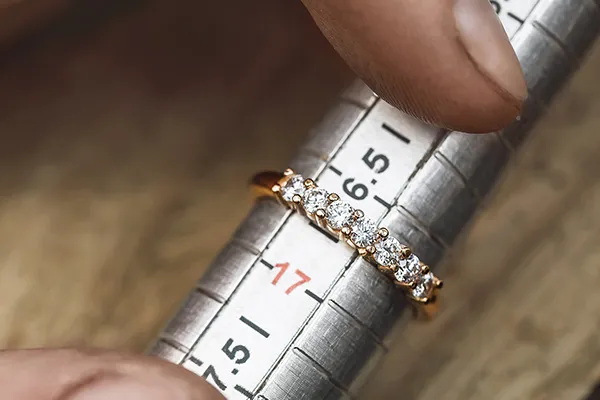
Our repair services may include resizing, soldering, laser work, reshaping, refinishing, stone tightening, clasp replacement, chain repair, polishing, rhodium plating, and other restoration work. The recommended repair depends on the construction, materials, condition, and intended use of the piece.
We can often work on antique jewelry, although older pieces may require additional care and specialized techniques. Costume jewelry is more limited; many costume pieces cannot be repaired economically or successfully because of their materials and construction.
Are repairs documented when they come in?
Yes. Every item is photographed from multiple angles at intake. We document the condition of the piece and note visible concerns on the repair ticket provided to the customer.
This may include loose stones, existing damage, worn prongs, bent components, scratches, missing parts, or other conditions that could affect the repair.
Will I receive a written estimate?
Yes. We provide a free estimate for recommended work. Estimates may be communicated in person or by text message, depending on the project.
If the scope or cost changes after additional inspection, we contact the customer before proceeding.
What happens if additional damage is discovered?
Sometimes a piece reveals additional issues after it has been cleaned or examined more closely. For example, a crack, weakened setting, or worn component may not be fully visible when the item first arrives.
If we discover an issue that falls outside the original estimate or requires additional work, we notify the customer and obtain approval before proceeding.
Do repairs require approval before work begins?
Yes. We obtain approval before beginning the recommended work. Additional approval is required if the repair moves outside the original estimate or if newly discovered damage changes the scope of the project.
How long do jewelry repairs take?
Most jewelry repairs are completed within a 1-2 week timeframe, though some complex repairs take longer. An expected timeline is offered along with an estimate.
Are repairs guaranteed?
We stand behind work completed by Hingham Jewelers within reason. Jewelry is subject to normal wear, accidental damage, pre-existing conditions, and the ongoing effects of use. We will explain any special limitations or concerns associated with a repair.
How long are completed repairs kept?
Completed repairs are safely stored in our vault. We encourage customers to pick up finished work as soon as reasonably possible.
Is cleaning and inspection included after a repair?
Cleaning and inspection are always recommended and complimentary.
Regular inspections are an important form of preventative maintenance. Identifying a loose stone or weakened prong early can help prevent more extensive and costly damage later. Tightening a stone, for example, is generally far less expensive than replacing a stone that has fallen out and been lost.
Watch Repair and Service
Hingham Jewelers works with most major watch brands and can help determine the appropriate service path for your watch.
Which watch services are performed in-house?
Watch batteries, link adjustments, and bracelet sizing are often completed while you wait.
Other work, including movement cleaning, mechanical repair, and full overhauls, is completed by qualified watch professionals through our service network.
Do you replace watch batteries and gaskets?
Yes. We replace batteries and gaskets when appropriate for the watch and its construction.
Do you pressure-test watches?
Pressure testing is available for certain higher-end brands and watches when appropriate. It is not performed on every brand or every watch, so we will explain what service is suitable for your specific timepiece.
Do you polish watch cases and bracelets?
Yes, polishing and refinishing may be available for higher-end watches, depending on the brand, model, materials, and condition.
Polishing is not always appropriate. Removing too much metal or changing the original lines of a case can affect a watch’s value, so the condition and construction should be evaluated first.
Do you perform full mechanical overhauls?
Yes. Full mechanical overhauls and movement services are available through qualified watch specialists.
How long does watch service take?
Watch-service timelines vary considerably:
-Simple battery replacements may be completed while you wait.
-Less complex cleanings may take approximately 4-6 weeks.
-High-end brand service and complicated repairs may take 12-18 weeks.
Vintage watches may require additional time because replacement parts can be difficult to locate. Patience is often necessary when servicing an older or unusual timepiece.
Do you accept vintage watches?
Yes. We evaluate vintage watches, although parts availability, condition, and previous repairs can make the service process more complicated and time-consuming.
Jewelry Appraisals and Insurance Documentation
What kind of appraisals does Hingham Jewelers provide?
We provide several types of jewelry appraisals, including:
-Insurance appraisals for retail replacement value
-Estate appraisals for jewelry being passed down or divided
-Fair-market value appraisals
-Evaluations for general planning or documentation
In most cases, customers are seeking an insurance replacement appraisal. We will discuss the purpose of the appraisal so the appropriate type of valuation can be prepared.
How much does an appraisal cost?
Appraisals generally start at approximately $125, depending on the complexity of the piece and the documentation required. More involved appraisals may cost more, and a price break is available when multiple items are evaluated together.
An appraisal included with a new purchase is complimentary.
How long does an appraisal take?
Inspections performed on designated appraisal days are typically done while you wait. The written documentation generally follows within a few days.
More complex items may require additional research or time.
Can you appraise jewelry purchased elsewhere?
Yes. We regularly appraise jewelry purchased from other jewelers, inherited jewelry, and pieces whose original documentation may no longer be available.
What should I bring to an appraisal?
Bring any prior documentation you have, including:
-Original receipts
-Previous appraisals
-Gemstone or diamond grading reports
-Designer or brand documentation
-Service records
-Original boxes or certificates, when available
Diamonds and gemstones are not unset as part of a standard appraisal. Their weights are estimated while they remain mounted. An exact weight or grading report from the time the piece was made can therefore be helpful.
How often should jewelry be reappraised?
We generally recommend reviewing an appraisal every three to five years. Changes in precious-metal prices, gemstone markets, replacement costs, and the condition of the jewelry may affect the appropriate insurance value.
Does an appraisal guarantee what the jewelry would sell for?
No. An insurance appraisal and a purchase offer serve different purposes.
An insurance appraisal estimates the cost to replace an item at retail. A purchase offer reflects what a buyer believes the item is worth in the current market. Anyone considering selling a valuable piece should consider obtaining multiple offers.
Do you work with specific insurance companies?
We work with and help facilitate customer claims from insurance companies of all kinds. Our goal is to make the documentation and replacement process as straightforward as possible.
Selling Jewelry at Hingham Jewelers
Does Hingham Jewelers buy gold?
Yes, but we do not offer traditional “cash for gold” services. We will not indiscriminately purchase large piles of scrap jewelry.
We evaluate pieces individually and work with specialized estate buyers who are particularly interested in unusual, distinctive, and high-quality jewelry. We are looking for special pieces—not simply trying to assign a quick value to a group of unwanted gold.
Gold-buying events may also be offered periodically. Outside of those events, purchasing is handled by appointment and on a case-by-case basis.
Do you buy inherited jewelry?
We may purchase inherited jewelry, depending on the piece. We are generally most interested in fine gold and platinum jewelry, unusual designs, signed pieces, estate jewelry, and items with strong craftsmanship or market demand.
Some inherited pieces may be better candidates for redesign, while others may be appropriate for sale. We can help you understand the available options.
Do you buy diamonds?
Yes. We evaluate diamonds individually and are particularly interested in higher-quality natural diamonds and distinctive stones with strong market demand. We do not purchase lab grown diamonds.
The value of a diamond depends on more than carat weight. Cut quality, color, clarity, certification, proportions, condition, shape, and current market demand may all affect an offer.
Do you buy luxury watches?
Yes. Hingham Jewelers works with a trusted watch partner who can evaluate luxury watches for purchase or trade opportunities.
Brand, model, condition, age, service history, originality, documentation, and current demand can all affect the value of a watch.
How is jewelry valued?
Jewelry is evaluated based on its materials, craftsmanship, condition, rarity, and current market demand.
Depending on the item, we may consider:
-Gold, platinum, or other precious-metal content
-Diamond and gemstone quality
-Brand or designer
-Age and historical significance
-Condition and completeness
-Rarity or uniqueness
-Current resale demand
-Whether the piece is better suited for resale, estate sale, or recycling
Not every item has the same type of value. A well-made antique ring, for example, may be worth significantly more than its scrap-metal value.
Will I receive cash, a check, or store credit?
Depending on the circumstances of the transaction, we may offer a check, or store credit.
The available options can be discussed when an offer is presented.
Do I need an appointment?
Yes. Offers are not generally made on the spot for walk-in visits.
Appointments allow us to inspect each piece carefully and determine whether it is appropriate for purchase. Some evaluations can be completed relatively quickly, while others require additional research or a formal inspection. Offers may take several days to prepare.
Can I leave jewelry for evaluation?
Yes. In some cases, customers may leave items with us for a more detailed evaluation. We will explain the process and expected timing at intake.
Understanding the Different Types of Jewelry Value
One of the most common sources of confusion is the difference between what jewelry is insured for and what it might sell for.
Melt value
Melt value applies when a piece is considered primarily scrap. The value is based mostly on the weight and purity of the gold, platinum, or other precious metal.
If a piece has no meaningful resale, design, gemstone, or estate value, its melt value may be the lowest possible valuation.
Retail replacement value
Retail replacement value is generally used for insurance purposes. It represents what it may cost to replace an item with a comparable piece at today’s market prices if it is lost, stolen, or destroyed.
When you insure jewelry, you are paying a premium so that the insurance company can help you replace the item—not so that you can sell it for the appraised amount.
An insurance appraisal does not guarantee that a jeweler or buyer would pay that amount for the piece.
Fair-market or estate value
Fair-market value is more representative of what a piece may be worth in its current condition in an ordinary sale or estate situation.
This value may be considerably different from retail replacement value. It takes into account current demand, condition, comparable items, and the circumstances of the sale.
Sentimental value
Sentimental value reflects the memories and personal meaning attached to a piece. It may be deeply important to the owner, but it is not generally quantifiable in monetary terms.
A piece may have modest market value but enormous sentimental value. In those situations, redesigning or preserving the jewelry may make more sense than selling it.
What Hingham Jewelers is actually offering to purchase
We inspect each piece individually. We do not indiscriminately buy every item brought into the store.
Our goal is to identify special pieces that may have meaningful value as jewelry, estate merchandise, or high-quality materials. If an item is strictly scrap, we will explain that clearly.
Current gold and platinum prices also have a significant effect on offers. Precious-metal markets change daily, so the value of a piece may change over time.
Should You Sell an Antique Piece or Redesign It?
There is no universal answer. The right decision depends on the piece and your connection to it.
If a piece has sentimental importance, redesigning it may allow you to preserve the original materials while creating something you will actually wear. Our custom design process can incorporate existing gold, diamonds, gemstones, or meaningful design elements. Our experienced goldsmiths work both in-house and in local workshops.
If a piece has little sentimental value, it may be worth learning what it could sell for before deciding what to do. We can help explain whether a piece appears better suited for sale, redesign, or simple preservation.
How to Get Started
Whether you need a repair, appraisal, watch service, or evaluation for a possible sale, the best first step is to contact Hingham Jewelers and describe what you have in mind.
Appointments are recommended for jewelry-buying evaluations and appraisals. Bring any documentation you have, and be prepared to explain whether your goal is insurance coverage, an estate valuation, a repair, a redesign, or a possible sale.
At Hingham Jewelers, our job is not simply to assign a number to a piece of jewelry. We help clients understand their options and make informed decisions about items that may have financial, historical, and personal significance.